
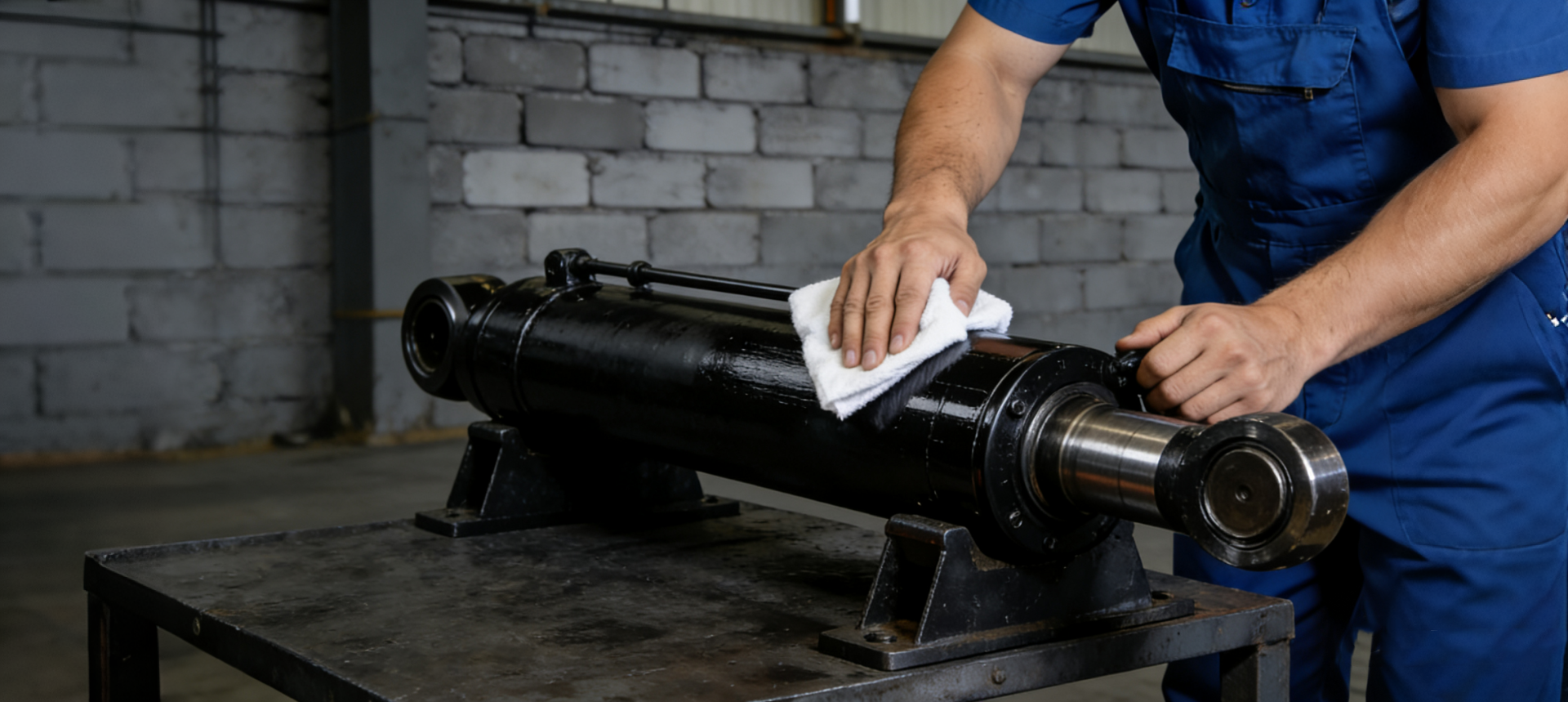
 Hydraulic cylinder cleaning is key to its durability. As a top hydraulic cylinder manufacturer, we offer expert cleaning & maintenance guidelines to maximize your cylinder’s performance.
1. Rust Prevention: First Line of Defense for Hydraulic Cylinders
During the maintenance cycle, rust prevention is a top priority. The piston component of the hydraulic cylinder extends out of the cylinder barrel during operation, making it vulnerable to oxidation and acid gas corrosion. As a trusted hydraulic cylinder manufacturer, we strongly recommend coating the piston (a key load-bearing part) with suitable grease. This protective layer can effectively prevent erosion, avoiding potential breakage during work—this simple step can extend the basic service life of hydraulic cylinders by over 30% and is applicable to engineering, farm, and custom hydraulic cylinders.
2. Daily Maintenance: Matching Oil, Seal, and Cleaning
Daily maintenance of hydraulic cylinders cannot be separated from proper cleaning, as well as matching suitable hydraulic oil and oil seals. Different types of hydraulic cylinders (such as high-pressure hydraulic cylinders and bottom flange engineering cylinders) require oil seals of different materials to ensure sealing performance and service life. The heavier the load the hydraulic cylinder bears, the greater the pressure on the cylinder barrel—thus, its maintenance becomes a core part of the entire hydraulic system’s upkeep. As a manufacturer focusing on hydraulic cylinder reliability, we always remind clients, "The right accessories + regular cleaning = half the maintenance success."
3. Key Tips for Cleaning Hydraulic Cylinder Power Units
Regular cleaning of the hydraulic cylinder power unit is crucial to avoid residue buildup affecting performance. What details should we pay attention to? Our technical team summarizes a practical trick: Heat the cleaning oil to an appropriate temperature. This temperature range can effectively dissolve oil residues and impurities attached to the internal components without damaging the cylinder’s seal or surface coating. This method has been verified by our hydraulic cylinder testing center and is suitable for engineering cylinders, high-pressure cylinders, and custom models.
4. Post-Cleaning Follow-Up: Guarantee Long-Term Performance
Cleaning is not the end—proper follow-up work is the key to preventing corrosion and maintaining stable performance. Two core points from our manufacturer’s experience: First, after cleaning, continue to operate the equipment for 10-15 minutes until the cylinder temperature returns to normal, which can evaporate residual moisture and avoid internal rust. Second, the cleaning oil must be completely drained and discarded and must not be mixed with new hydraulic oil—this avoids oil pollution and premature aging of seals.
Scenario-Specific: Cleaning & Maintenance for Farm Hydraulic Cylinders
Farm hydraulic cylinders often work in dusty, muddy environments, so targeted cleaning methods are needed. Our manufacturer recommends two practical strategies: If the cylinder is in an intermittent operation system, perform an idling cycle every 10 minutes—this uses the flow of hydraulic oil to flush out dust and impurities in the cylinder. If thorough cleaning is required, disassemble and clean when the machine is shut down, and match high-pressure air guns to blow out gaps—this achieves a more ideal cleaning effect and reduces the risk of abrasive wear.
As a professional hydraulic cylinder manufacturer, we offer more than reliable bottom flange, farm, and custom hydraulic cylinders—we provide full-cycle maintenance support too. We also supply OEM/ODM services to meet your end-to-end personalized needs.


Copyright © 2026 无锡市世邦机械制造有限公司 Ltd. All Rights Reserved. POWERED BY WEIMOBTRADE
